Category Archives for "Russian Language"


Driving is one of the most common real-life situations where Russians speak fast, emotionally, and very precisely. In this lesson, you’ll learn how to talk about driving a car, traffic situations, and road accidents using the vocabulary Russians actually use in everyday life. You’ll learn how to describe what a driver does, to explain why […]
Continue reading
At the Intermediate level, vocabulary gaps are rarely about big words.They’re about small, everyday objects that Russians use constantly — and name very precisely. Today’s vocab group is all about wiping, drying, and cleaning.Many learners know one word — and use it everywhere. Russians don’t. Let’s fix that. Nouns Russians Use with “Wiping Things” 1️⃣ […]
Continue reading
Level: Intermediate (A2–B1+)Goal: Learn how Russians congratulate others and express wishes in formal and informal situations. PART 1. HOW TO CONGRATULATE In Russian, congratulations are built with the verb поздравлЯть/ поздрАвить. This verbs is used with two government forms: КОГО/Acc. (for a person) + С ЧЕМ/ Instr. (for a holiday/ occasion) 1️⃣ Congratulating ON THE […]
Continue reading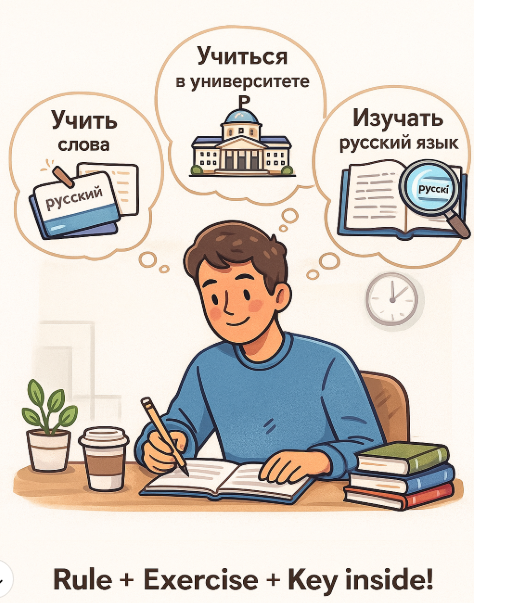
Struggling with the Russian “study” verbs? In our new post we review the essential rule that helps you finally understand the difference between учить / учиться / изучать and when to use each one in real-life situations. You’ll also get a short, practical exercise with the answer key so you can check yourself and make […]
Continue reading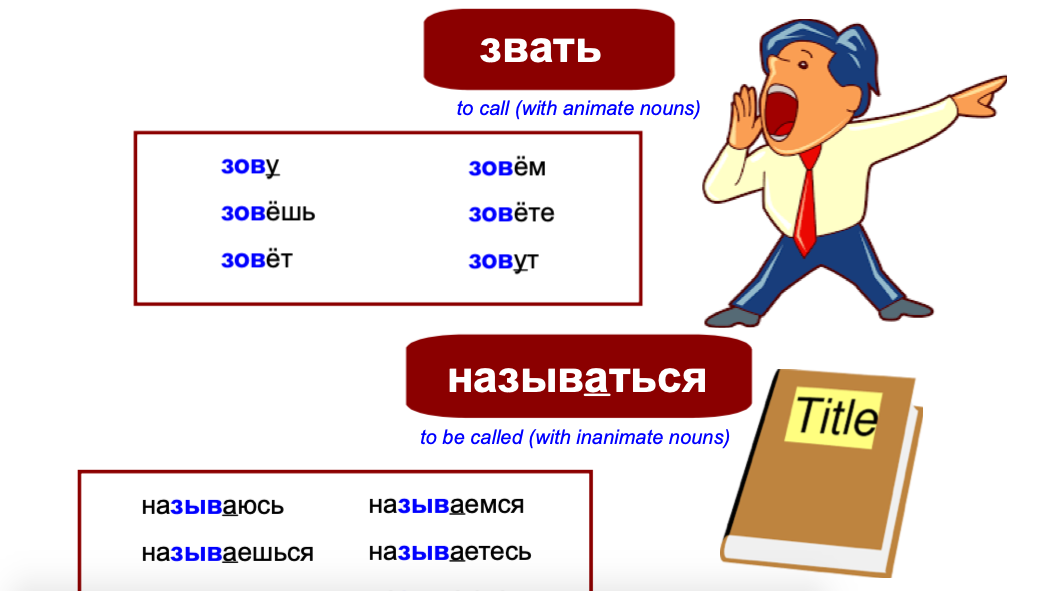
Learn how to use one of the most essential Russian verbs — звать – называться — and its related forms (называть, называться, созвать, призвать, and more). This concise visual guide helps learners distinguish between asking someone’s name (Как зовут?) and identifying things or places (Как называется?). Ideal for intermediate students who want to deepen their […]
Continue reading