
Зрители, cотрудники, подписчики: How Russians Are Named in Different Situations
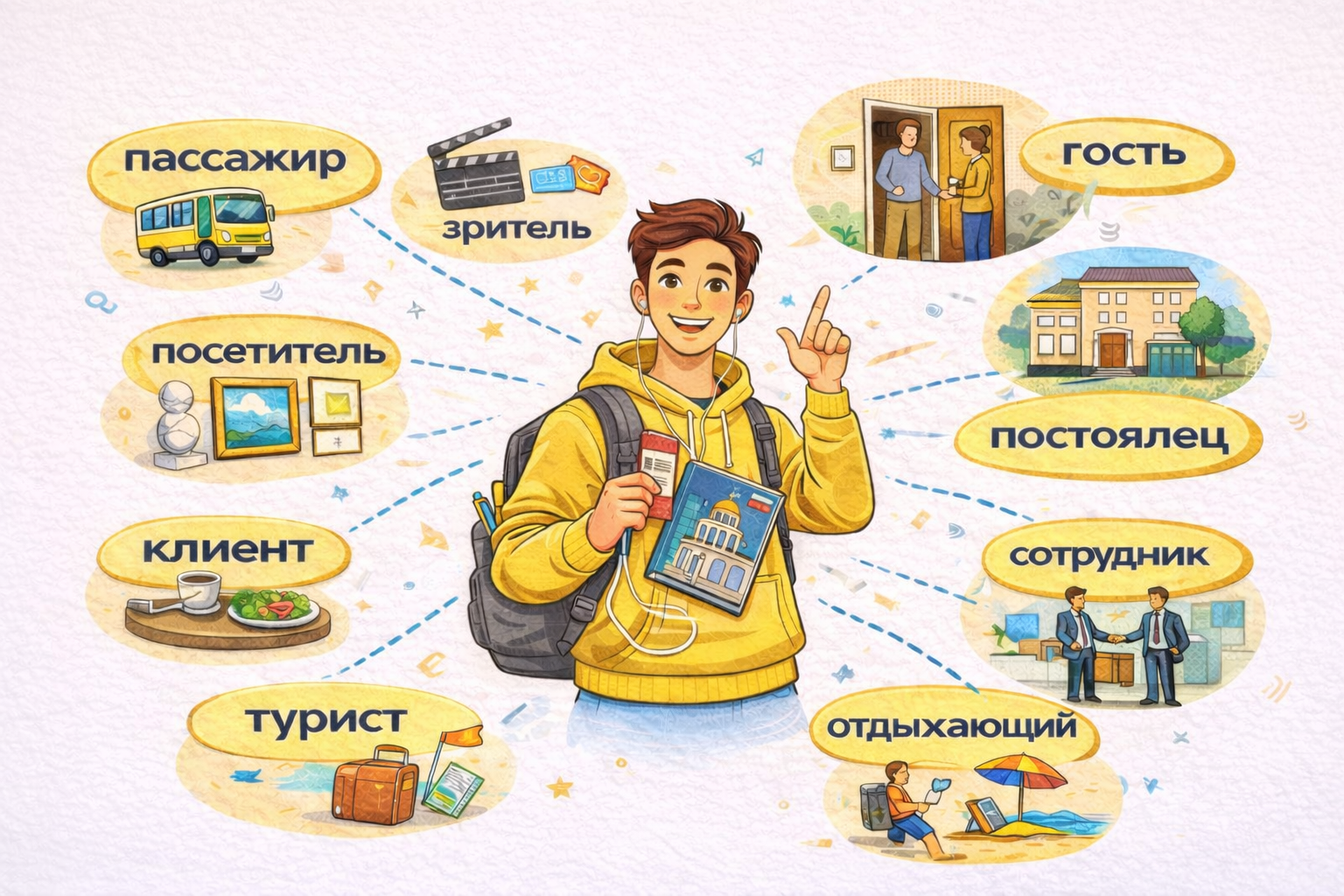
One of the most common Intermediate-level frustrations is this:
“I know the word… but I’m not sure it’s the right one for this situation.”
Russian is very precise about who you are depending on where you are.
The image above shows a powerful everyday pattern that native speakers use automatically — and Intermediate learners often hesitate with.
Let’s break it down clearly and practically.
Why This Is an Intermediate Skill (Not Beginner)
At Beginner level, you learn:
- Я студент
- Я турист
At Intermediate level, Russians expect you to:
- switch nouns automatically
- choose the correct role
- use masculine / feminine forms naturally
That’s exactly what this lesson trains.
Everyday Situations You Must Control
Here are some of the most frequent real-life contexts shown in the image:
- 🎭 В кинотеатре, в театре, в цирке →зрИтель / зрИтельница – зрИтели viewer(s), audience
- 🖼️ В музее, на выставке → посетИтель / посетИтельница – посетИтели visitor(s), patron(s)
- 🧳 На экскурсии → турИст / турИстка – турИсты tourist(s)
- 🏖️ На пляже, в санатории → отдыхАющий / отдыхАющая – отдыхАющие vacationer(s), beachgoer(s)
- 🏨 В отеле, в гостинице → гость / гостья – гОсти, постоЯлец – постоЯльцы hotel guest(s)
- 🛒 В магазине, на рынке → покупАтель / покупАтельница – покупАтели customer(s), buyer(s)
- 🍽️ В ресторане → гость/ гОстья – гОсти guest(s), посетИтель/ посетИтельница – посетИтели
- 🚍 В транспорте, в такси → пассажИр / пассажИрка – пассажИры passenger(s)
- 📚 В библиотеке → читАтель / читАтельница – читАтели (library) patron(s)
- 💇♀️ В парикмахерской, в банке → клиент / клиентка – клиенты client(s)
- 🏥 В больнице, в поликлинике → больнОй / больнАя – больные patient(s), пациент / пациентка – пациенты (patient, formal)
- 📞 Для телефонной сети, сотового оператора → абонЕнт / абонЕнтка – абонЕнты subscriber(s)
- 🏛️ В госучреждении → посетИтель / посетИительница – посетИтели
- 📩 В блоге, в соцсетях, на YouTube → подпИсчик / подпИсчица – подпИсчики subscriber(s)
- 💻 В приложении (app), на сайте → пОльзователь / пОльзовательница – пОльзователи user(s)
- ⛪ В церкви → прихожАнин / прихожАнка – прихожАне parishioner(s)
- 🏠 В квартире, в подъезде → жилЕц – жильцЫ tenant(s)
- 🏠 В городе, в области, в регионе, в стране → жИтель / жИтельница – жИтели resident(s)
- 🏠 В городе → горожАнин / горожАнка – горожАне townspeople
- 🌍 В родной стране → гражданИн / граждАнка – грАждане citizen)s)
- 💼 На работе → сотрУдник / сотрУдница – сотрУдники employee(s), staff member(s), рабОтник / рабОтница – рабОтники worker(s)
If you hesitate here, native speech feels fast and confusing.
Common Mistakes Intermediate Learners Make
❌ Using one noun everywhere
❌ Ignoring feminine forms
❌ Translating from English (“I’m a customer everywhere”)
❌ Avoiding the noun completely
Native speakers don’t do that — and now you don’t have to either.
How to Practice This Correctly
- Say the location first
- Ask yourself: “What role do I play here?”
- Choose the correct noun + gender
- Say it out loud — repeatedly
This is exactly how Russian fluency is built:
small automatic switches, not big grammar rules.
📢 Exercise. Who is being addressed?
Instructions:
Read the announcement or form of address.
Choose who it is addressed to.
- Уважаемые ____________________________, поезд отправляется через пять минут.
a) туристы
b) пассажиры
c) клиенты
- Уважаемые ___________________, банк закрывается через десять минут.
a) посетители
b) клиенты
c) сотрудники
- Уважаемые ___________________________, в нашем музее не разрешается фотографировать.
a) зрители
b) туристы
c) посетители
- Уважаемые ________________________, библиотека закрывается в 18:00.
a) покупатели
b) абоненты
c) читатели
- Уважаемые _____________________, в нашем подъезде найдена дамская сумочка.
a) жильцы
b) пользователи
c) абоненты
- Уважаемые _____________________, просьба соблюдать тишину в поликлинике.
a) пациенты
b) посетители
c) сотрудники
- Уважаемые _______________, завтрак в нашей гостинице подаётся с 7 до 10 утра.
a) туристы
b) гости
c) сотрудники
- Уважаемые _______________________, наше собрание начинается в 9:00.
a) сотрудники
b) работники
c) посетители
✅ Answer key
1 — b
2 — b
3 — c
4 — c
5 — с
6 — a
7 — b
8 — а
💡 Why this exercise matters
- These words are most often heard, not produced
- Learners must decode role-based vocabulary instantly
- This mirrors metro announcements, loudspeakers, signs, emails
If this lesson made you think “Oh — that’s why I hesitate”, you’re exactly the learner METRO: Conversational Russian was created for. It helps you stop translating, stop guessing, and start choosing the right words naturally — the way Russians do. Start with Book 1. Daily Routine and feel the difference right away. Get it now with 70% off.