
- in Uncategorized by Marina Koker
Say It Like a Russian: “I’m Surprised!”
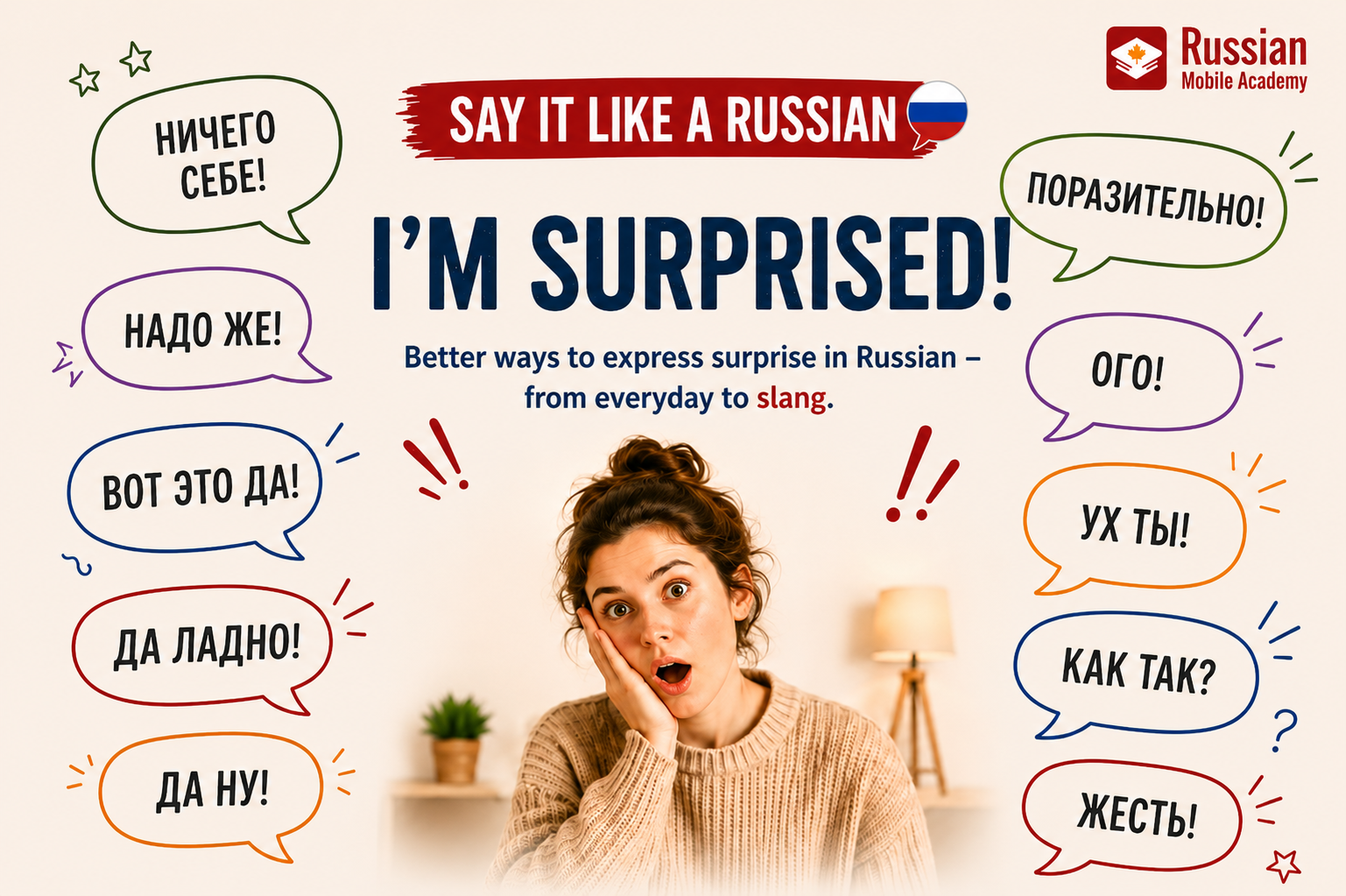
One of the fastest ways to sound more natural in Russian is to stop using the same expression every time you’re surprised.
Most textbooks teach only:
Я удивлён. I’m surprised.
It’s perfectly correct—but native speakers have dozens of other ways to react depending on the situation and the people they’re talking to.
Let’s look at four common levels of speech.
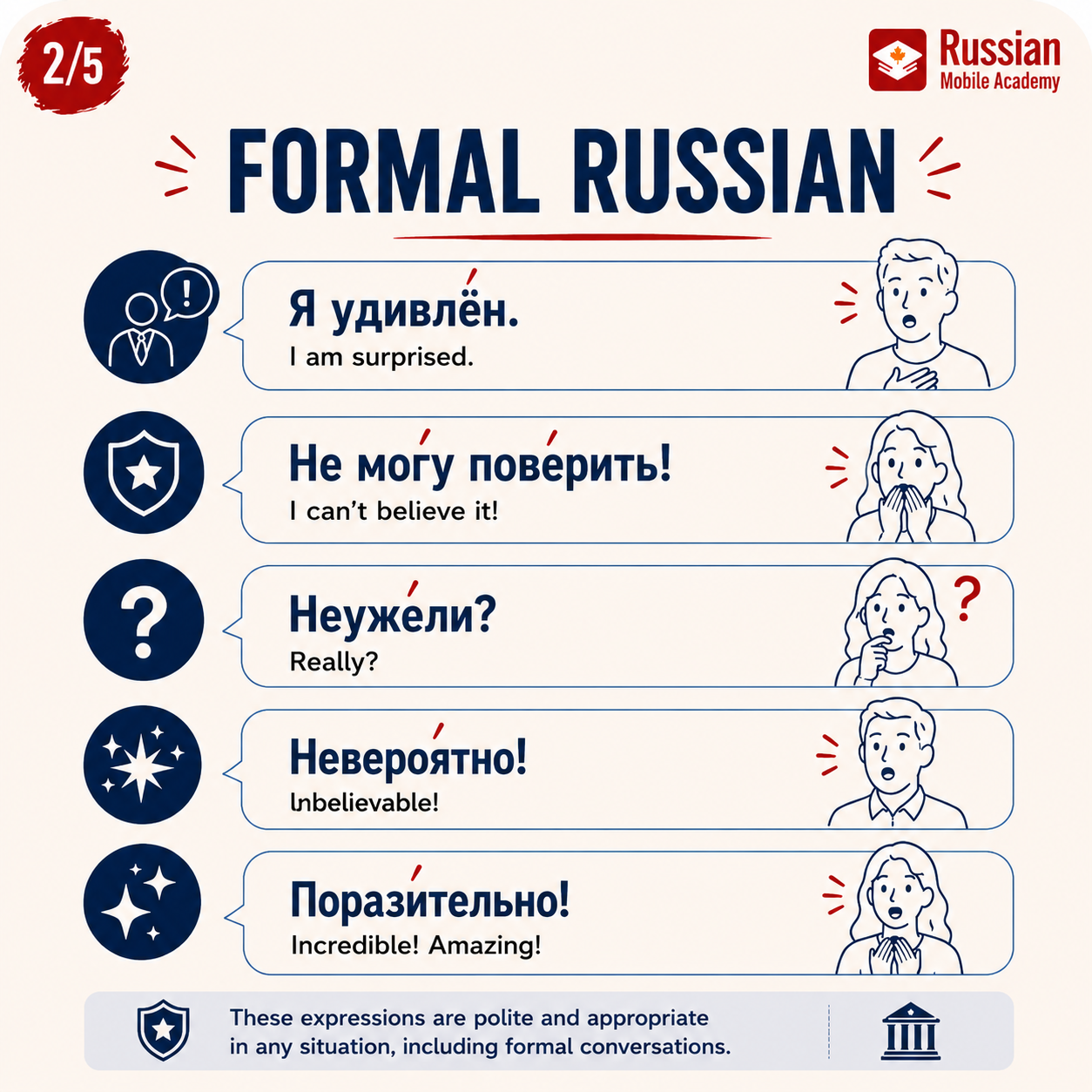
1. Formal Russian
These expressions are appropriate in professional settings or when speaking with people you don’t know well and use a -ВЫ- form.
Я удивлён. / Я удивлена́ ЧЕМ. I am surprised.
Пример: – Я приятно удивлён ва́шими результа́тами. – I’m pleasantly surprised by your results.
Не могу́ пове́рить! I can’t believe it!
Пример: – К нам в город скоро приедет сам президент. – Не могу́ пове́рить, что э́то пра́вда! – The president himself will be coming to our city soon. – I can’t believe it’s true!
Неуже́ли? Really?
Пример: – Он закончил свой проект. – Неуже́ли? Наконец-то! – He finished his project. – Really? Finally!
Невероя́тно! Unbelievable!
Пример: – Он сдал ЕГЭ нв 100 баллов! – Невероя́тно! Како́й потряса́ющий результа́т! – He scored 100 on the Unified State Exam! – Unbelievable! What an amazing result!
Порази́тельно! Incredible! Amazing!
Пример: Она занимается и музыкой, и рисованием. – Поразительно! Какой талантливый ребенок! – She’s into both music and drawing. — That’s incredible! What a talented child!
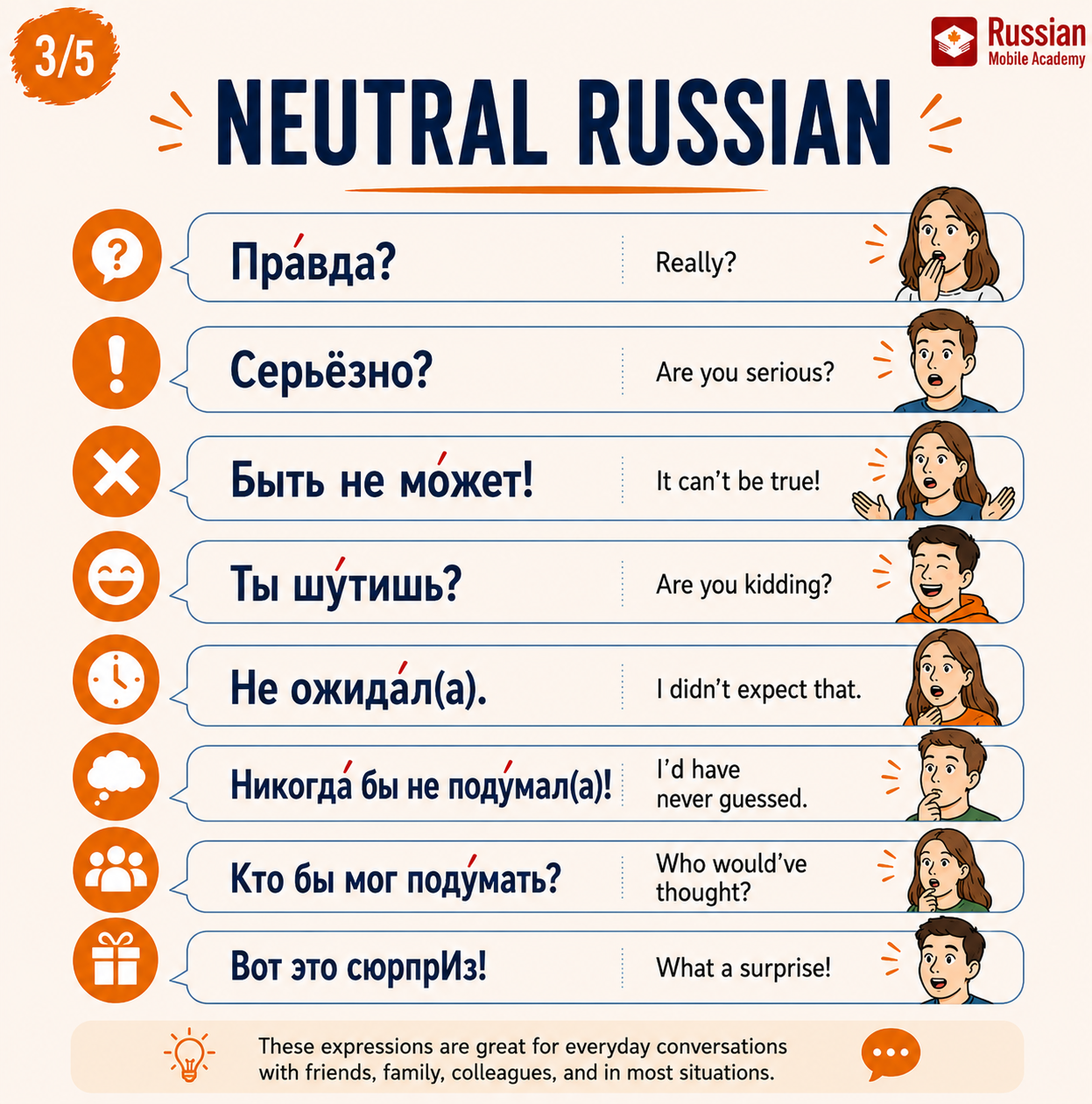
2. Neutral Russian
These are everyday expressions suitable for almost any conversation.
Пра́вда? Really?
Пример: – Магазин открывается в воесмь. – Пра́вда? Я думала, в девять. – The store opens at eight. – Really? I thought it opened at nine.
Серьёзно? Are you serious? Really?
Пример: – Дорогой, я купила нам билеты в театр на субботу. – Ты серьёзно? Я же еду в субботу на рыбалку!– Honey, I bought us tickets to the theater for Saturday. – Are you serious? I’m going fishing on Saturday.
Быть не мо́жет! It can’t be true!
Пример: – Представляешь? Петровы развелись. – Да быть не мо́жет! Они же только недавно поженились! – Can you believe it? The Petrovs got divorced. – No way! They just got married!
Ты шу́тишь? Are you kidding?
Пример: – Знаешь, я завтра уезжаю на дачу к родителям. – Ты шу́тишь? Мы же собирались вместе в поход! – You know, I’m going to my parents’ summer cottage tomorrow. – Are you kidding? We were supposed to go hiking together!
Не ожида́л(а) ЧЕГО + ОТ КОГО. I didn’t expect that.
Пример: – Вы слышали? Виктор подал заявление на развод. – Не ожида́ла от него такого. Он казался хорошим мужем.– Did you hear? Victor filed for divorce. – I didn’t expect that from him. He seemed like a good husband.
Никогда́ бы не поду́мал(а)! I would never have guessed!
Пример: – Ты знаешь, что Анна из Польши? – Никогда́ бы не поду́мала! Мне казалось, что она американка. – Do you know that Anna is from Poland? – I would never have guessed! I thought she was American.
Кто бы мог поду́мать? Who would’ve thought?
Пример: – А у Лены уже трое детей. – Кто бы мог поду́мать! Как время летит! – Lena already has three children. – Who would have thought! Time flies!
Вот э́то сюрпри́з! What a surprise!
Пример: – Мам, я завтра приведу к нам Андрея. – Вот э́то сюрпри́з! Конечно, приводи. Будем очень рады познакомиться! – Mom, I’m bringing Andrei over tomorrow. – What a surprise! Of course, bring him over. We’d love to meet him!
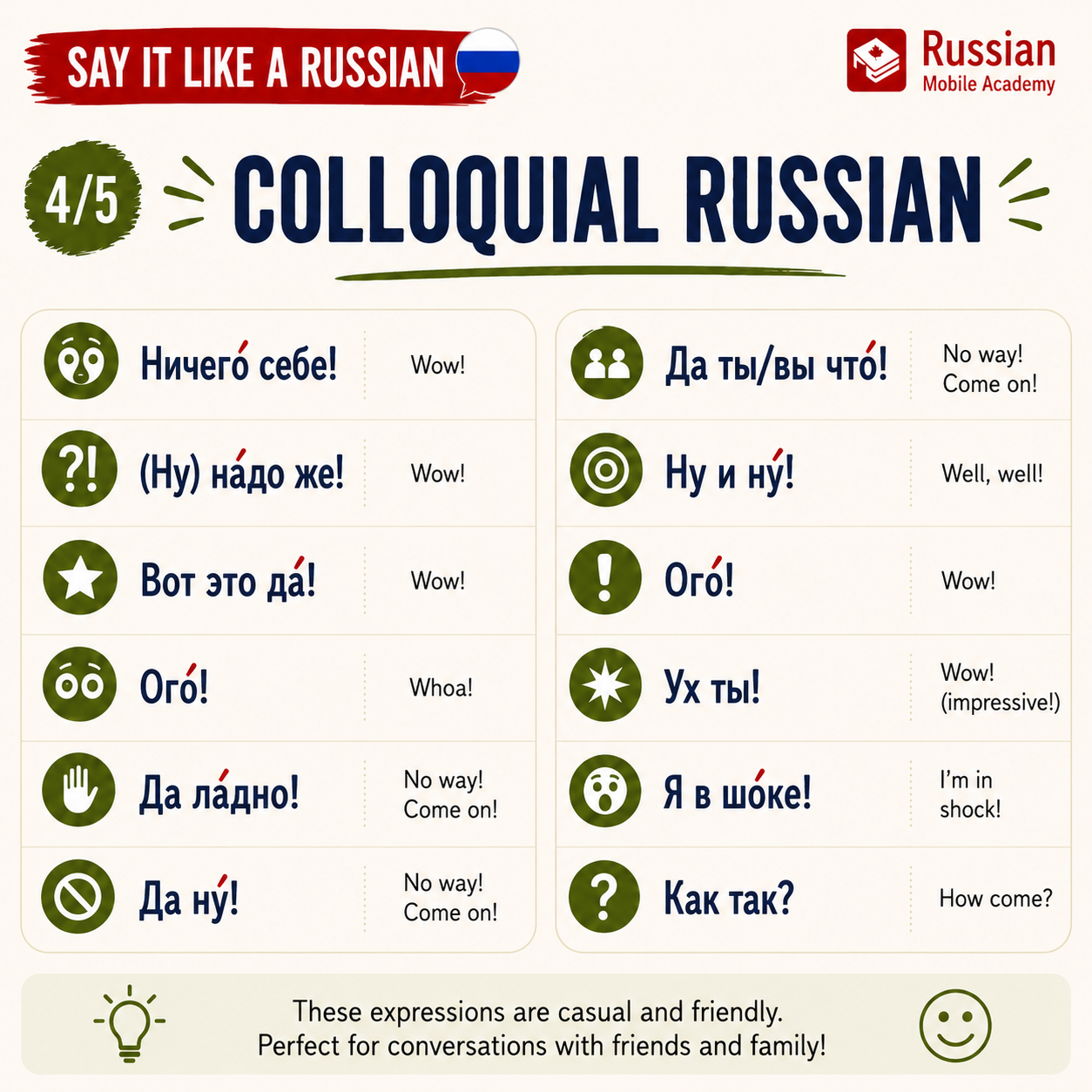
3. Colloquial Russian
These expressions are extremely common among friends and family. Educated Russians used them in informal situations with people they use a -ТЫ-form in communication.
Ничего́ себе́! Wow!
Probably the most common informal reaction.
Пример: – Слышала, что Настя вышла замуж за Диму? – Ничего́ себе́! Я не знала, что они встречались. – Did you hear that Nastya got married to Dima? – Wow! I didn’t know they were dating.
(Ну) на́до же! Wow!
Expresses pleasant surprise.
Пример: – Кстати, они переезжают в Москву. – На́до же! А когда? – By the way, they’re moving to Moscow. — Wow! When?
Вот э́то да! Wow!
Expresses mostly pleasant surprise.
Пример: – А вот и моя машина. – Вот э́то да! Какая крутая! – Here’s my car. – Wow! It’s very cool!
Ого́! Wow!
Very short, very common. The letter Г is pronounced by some people with a breathy sound, similar to “X”/ Unstressed O is pronounced as O: [огО] or [охО].
Пример: – Пап, я скоро женюсь. – Ого́! Вот э́то но́вость! – Dad, I’m getting married soon. – Wow! That’s news!
Да ла́дно! No way! Come on!
Usually expresses disbelief.
Пример: – Ты уже знаешь, что Володя уволился? – Да ла́дно! Я же его недавно видел. А почему? – Did you hear that Volodya quit his job? — Come on! I just saw him the other day. Why?
Да ну! No way! Come one!
Also expresses disbelief, similar to Да ладно!
Пример: – Я нашёл для нас отличный тур в Китай. – Да ну! Как здорово! – I found a great tour to China for us. – No way! That’s awesome!
Да ты (вы) что! No way! Come on!
Also expresses disbelief, similar to Да ладно! and Да ну!
Пример: – Мам, у нас скоро будет ребёнок. Ира беременна. – Да ты что! Вот так радость! Поздравляюю! – Mom, we’re going to have a baby soon. Ira’s pregnant. – No way! That’s wonderful! Congratulations!
Ну и ну! Well, well!
Expresses disappointment, regret about unpleasant surprise.
Пример: – Мам, меня отчислили из института. – Ну и ну! И что же ты собираешься теперь делать? Mom, I got kicked out of college. — Well, well! So what are you going to do now?
Ух ты! Wow!
Often expresses pleasant surprise.
Пример: – Мы собираемся покупать квартиру. – Ух ты! Как здо́рово! – We’re planning to buy an apartment. – Wow! That’s great!
Я в шо́ке! I’m in shock!
Can express both, pleasant or unpleasant surprise.
Пример: – Знаешь, мы переезжаем в Европу. – Я в шо́ке! Как? А куда? – You know, we’re moving to Europe. — I’m in shock! What? Where?
Как так? How come? недоумение
Expresses puzzlement about the surprise.
Пример: – Извини, мы больше не можем общаться – Как так? Я ничего́ не понима́ю. – I’m sorry, we can’t talk anymore.- How come? I don’t understand.
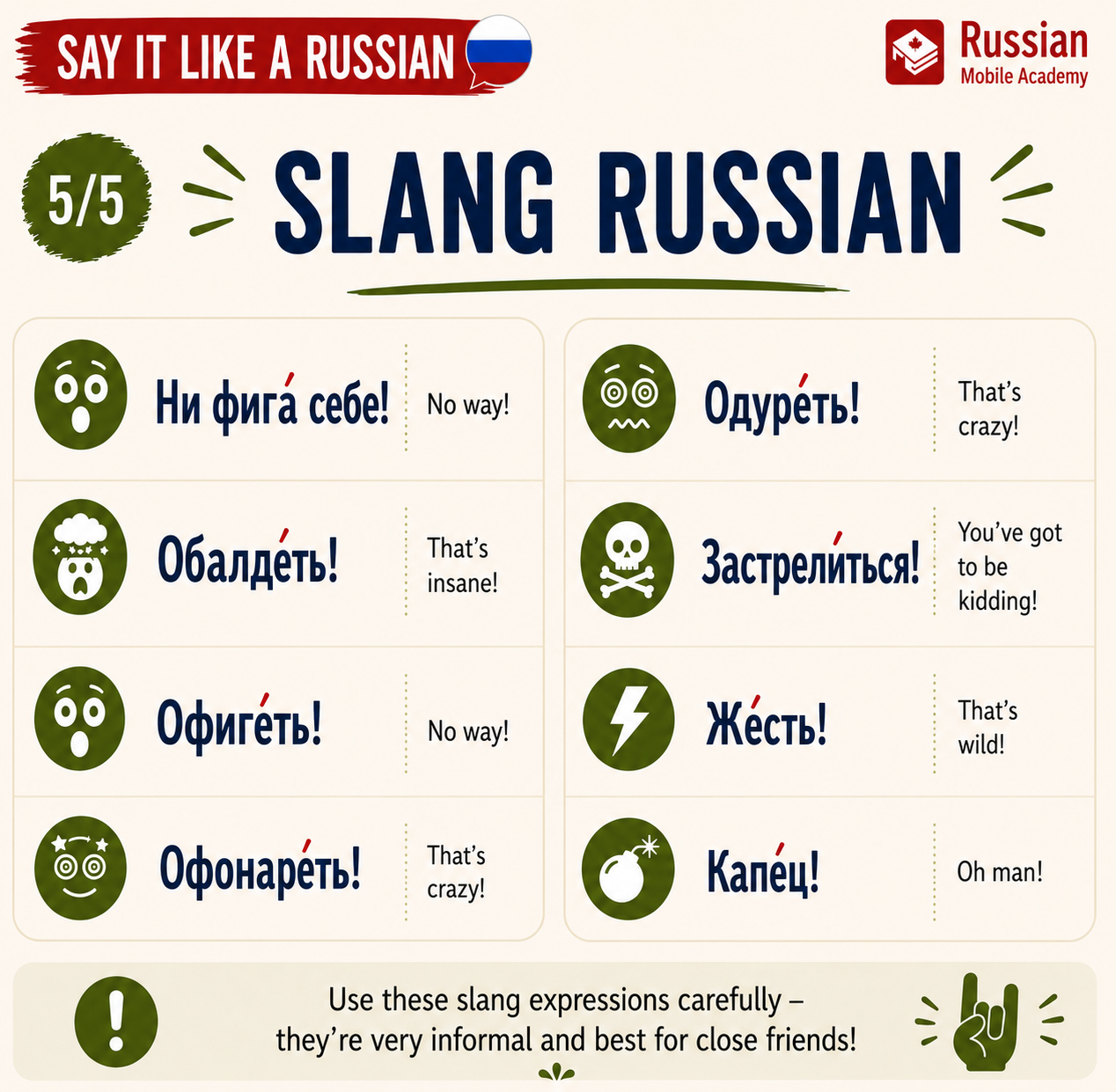
4. Slang Russian
These expressions are highly informal and mostly expresses strong emotions, and often sound more or less rude.
Educated Russians are careful about when and with whom they’d use them. These phrases can offend your interlocutor if used inappropriately, so it would be safer for you rather recognize them than use – at least until you are more comfortable with colloquial Russian.
Ни фига́ себе́! No way!
Stronger surprise than Ничего себе. Can be referred to both, pleasant or unpleasant surprise.
Пример: – Представляешь, ему только 18 лет. – Ни фига́ себе́! Он выглядит лет на 30. – Can you believe it? He’s only 18. — No way! He looks about 30.
Обалде́ть! That’s insane!
Slang reactions about both, pleasant or unpleasant surprise.
Пример: – Меня пригласили на интервью! – Обалде́ть! Вот э́то но́вость! I got invited to an interview! — That’s insane! That’s some news!
Офиге́ть! No way!
One of the most common modern slang reactions about both, pleasant or unpleasant surprise.
Пример: – Никита бросил институт. – Офиге́ть! О чём он только думает? – Nikita dropped out of college. -No way! What is he thinking?
Офонаре́ть! That’s crazy!
A rude slang reaction about unpleasant surprise.
Пример: – Дорогой, этот телефон стоит 80 тыс. рублей. – Офонаре́ть! Он что, золотой? Honey, this phone costs 80,000 rubles. — That’s crazy! Is it made of gold or something?
Одуре́ть! That’s crazy!
Literally: to go crazy. A rude slang reaction about unpleasant surprise.
Пример: – Ты уже слышал про новый закон? – Одуре́ть! Они там совсем с ума посходили в этой Думе. Have you heard about the new law yet? — That’s crazy! They’ve completely lost their minds over there in the Duma.
Застрели́ться! You’ve got to be kidding!
Very expressive slang. Lit. – I could just shoot myself!
Пример: – Наши хозяева решили продавать нашу квартиру. – Застрели́ться! И что нам теперь делать? Our landlords have decided to sell our apartment. — You’ve got to be kidding! What are we supposed to do now?
Жесть! That’s wild!
Very common among younger speakers. It’s a feminine noun.
Пример: – Он её выгнал из дома. – Какая жесть! – He kicked her out of the house. — That’s wild!
Капе́ц! Оh man!
Used when something goes terribly wrong—or simply to express strong emotion. It’s a masculine noun.
Пример: – Ты позвонил маме? У неё сегодня день рождения. – Капе́ц! Я совсем забыл. Did you call Mom? It’s her birthday today. – Oh man! I totally forgot.
Which expressions should you learn first?
If you’re an intermediate learner, start with these ten:
✅ Пра́вда?
✅ Серьёзно?
✅ Неуже́ли?
✅ Ничего́ себе́!
✅ На́до же!
✅ Вот э́то да!
✅ Ого́!
✅ Да ла́дно!
✅ Ты шу́тишь?
✅ Быть не мо́жет!
You’ll hear these constantly in real conversations, and they’re appropriate in most everyday situations.
Once those become natural, begin adding the colloquial and slang expressions to sound even more like a native speaker.
Continue building your natural spoken Russian with 25+ ways to say “I agree” in Russian.
Want to sound like a real Russian?
Learning vocabulary isn’t enough. Native speakers don’t just know more words—they choose different expressions depending on the situation, the relationship, and the level of formality.
That’s exactly the kind of language you’ll find throughout the METRO: Conversational Russian series.
Each lesson teaches not only what Russians say, but how, when, and why they say it—through authentic stories, everyday vocabulary, listening practice, and hundreds of real-life expressions you won’t find in most textbooks.
If you’re ready to move beyond textbook Russian and start speaking naturally, explore the METRO books and discover how real Russians communicate every day.